

Millions of people battle anxiety without knowing the root cause is inside their cells. Research suggests that your genes control a huge part of your daily stress tolerance. A DNA Stress Test explains why you might feel overwhelmed while others stay cool. This simple analysis turns your confusing symptoms into a clear plan. Here is the blueprint to fixing your internal alarm.

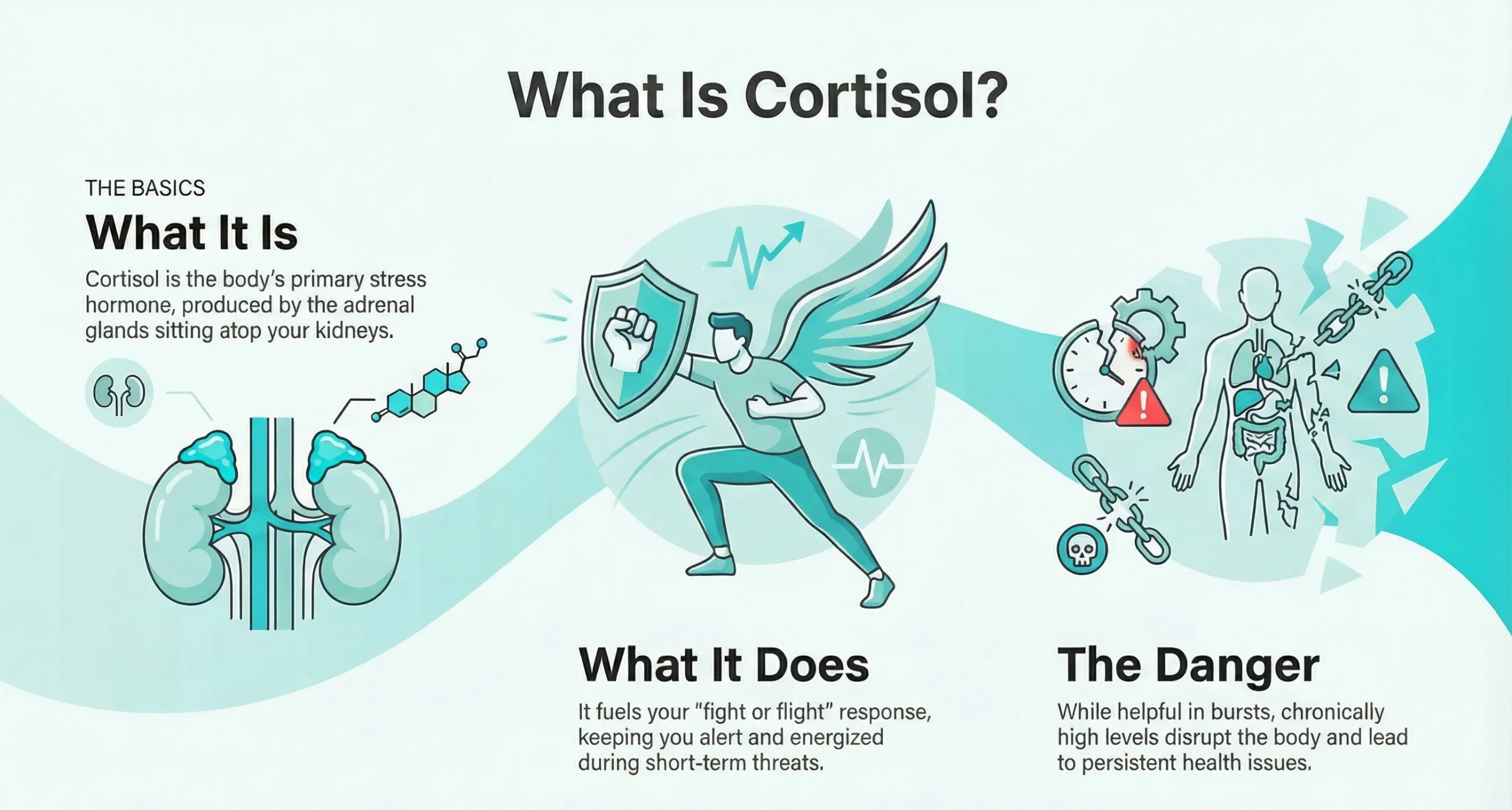
Cortisol is the body’s primary stress hormone. It is a steroid hormone produced by the adrenal glands, which sit right on top of your kidneys.
It plays a crucial role in your “fight or flight” response. This helps you stay alert and energized in short-term, high-stakes situations. However, cortisol is only beneficial in brief bursts.
When it remains high for too long, it disrupts nearly every system in your body. This leads to persistent symptoms that many people ignore.
Symptoms of Chronically High Cortisol:
Your body’s stress response is managed by a command center known as the HPA axis. When you sense a threat, this system signals your adrenal glands to produce cortisol.
Our genes are responsible for tuning how sensitive this entire system is. A key gene involved in this process is FKBP5, which acts as a genetic “brake pedal.”
Its job is to help the body return to normal after a stressful event. However, variations in this gene can result in a less effective brake. This causes cortisol to stay elevated for much longer than necessary.
This is why you might struggle to “turn off” the alarm after a hard day. It isn’t just one gene, either. Other factors, such as the COMT gene mutation, can slow down how your brain clears stress chemicals.
Researchers at the University of Gothenburg note that these DNA changes can persist for life. This underscores why understanding your genetic stress response is critical for long-term wellness.
A DNA Stress Test is a simple analysis that examines key genes involved in your HPA axis. The goal is not to predict an unchangeable fate.
Instead, the goal is to provide a personalized roadmap for wellness. By understanding your genetic predispositions, you can stop guessing what might work.
You gain significant benefits from genetic insights, as they allow you to implement strategies tailored to your body’s specific needs.
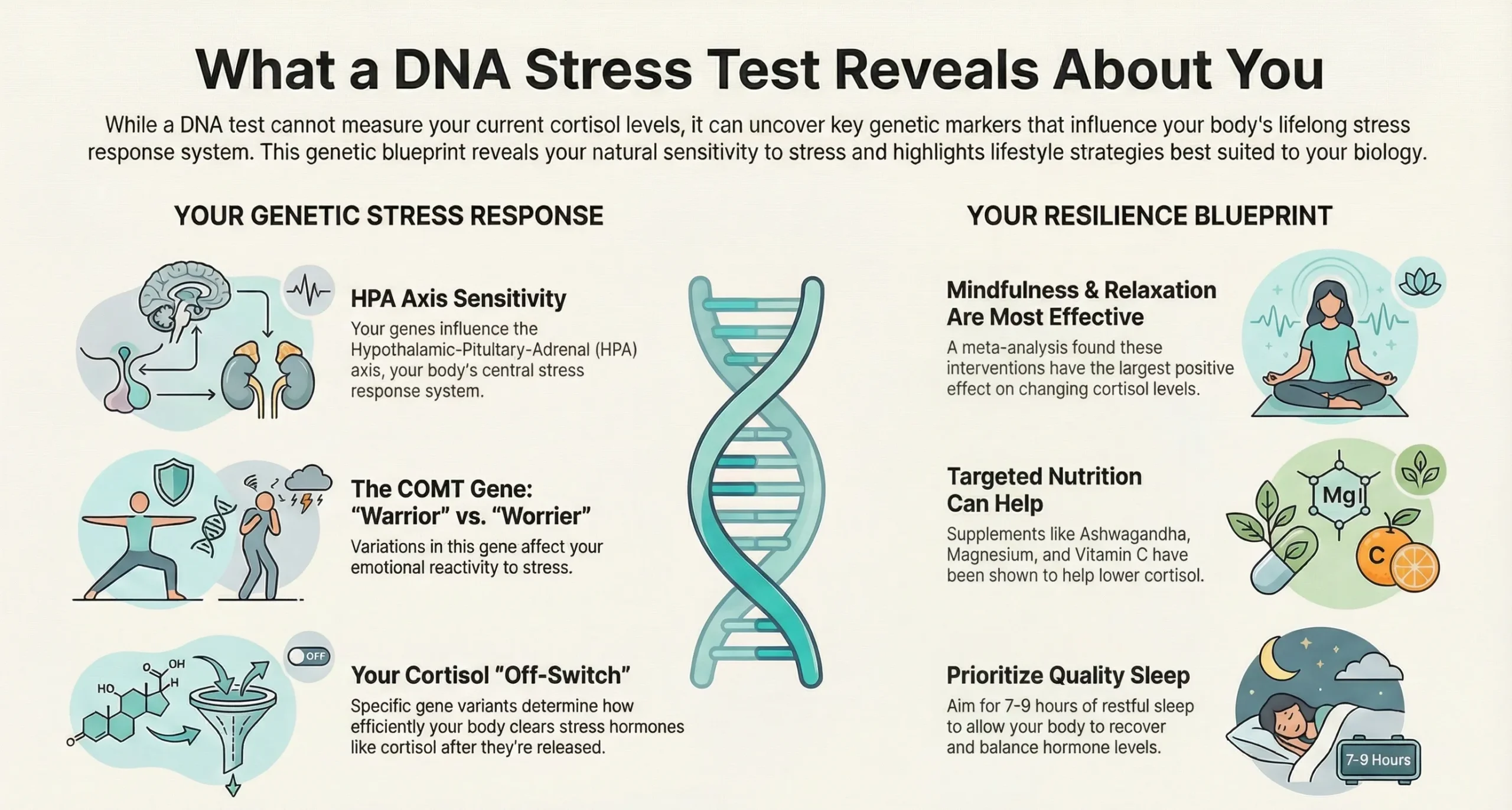
When analyzing a test, we look for three key pieces of information:
This resilience blueprint is more than just data. It is the foundation for a highly targeted action plan.
The true power of a DNA Stress Test lies in its ability to guide your daily choices. Here is how we use that data to help you.
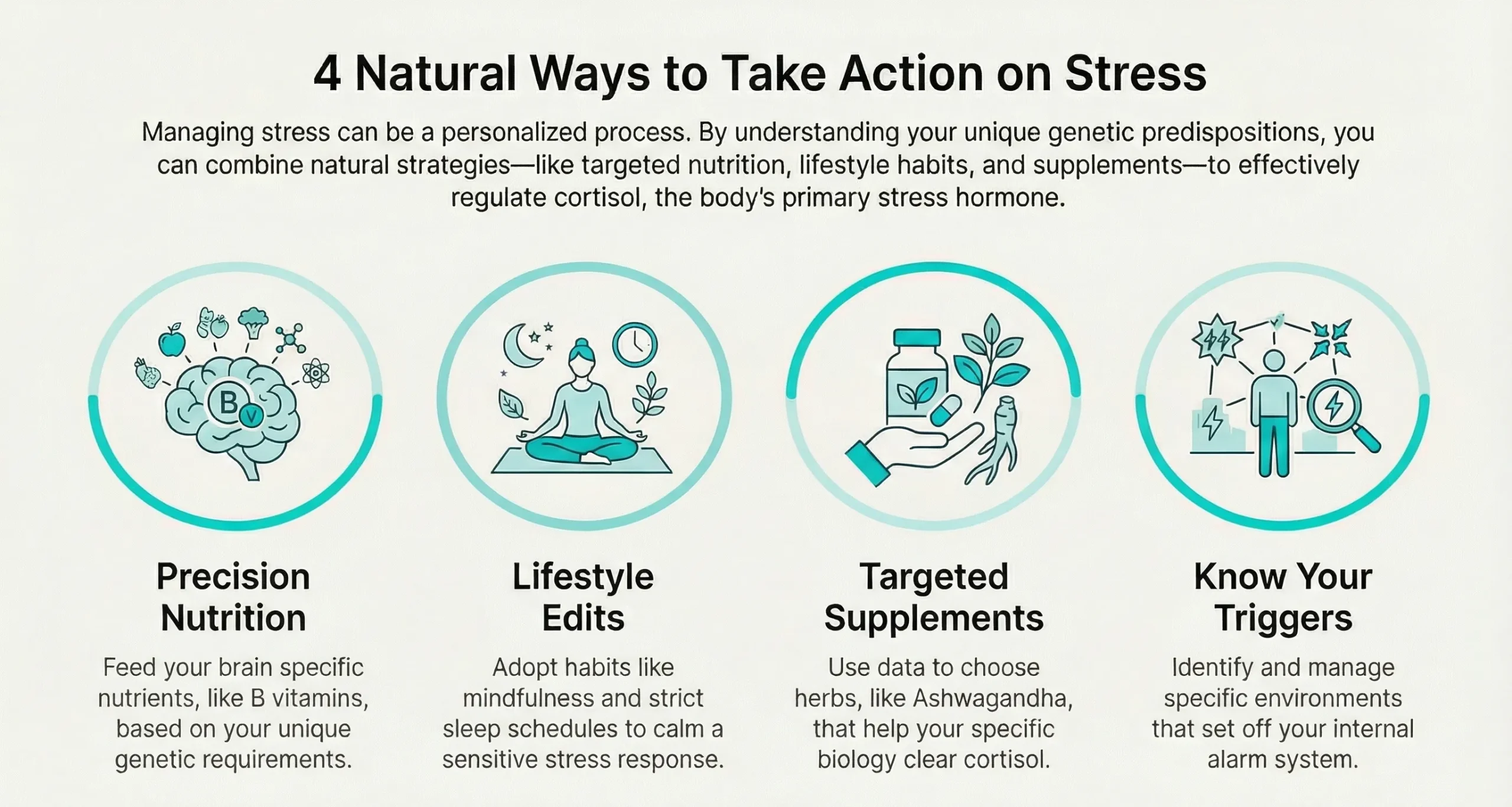
Your DNA blueprint shows which nutrients your brain requires. Some genetic variations make it harder for the body to process B vitamins.
These vitamins are essential for producing mood-regulating neurotransmitters. You may also need to check your cellular health. Evaluating your methylation efficiency can reveal if your body struggles to convert nutrients into the energy your brain needs to cope.
If your results show you are sensitive to cortisol, certain habits become non-negotiable. Studies confirm that mindfulness is highly effective for regulating cortisol.
For someone with a sensitive HPA axis, quality sleep isn’t just a luxury—it is a necessity. To truly manage mental wellness, it helps to look at a total health profile that connects your diet and fitness to your stress levels.
Instead of guessing with random supplements, use your genetic profile for real results. For clients with high sensitivity, I often recommend adaptogenic herbs.
Herbs like Ashwagandha help the body “adapt” to stress and balance cortisol. This approach lets you focus only on what your body actually needs.
Finally, knowing that you are genetically sensitive is empowering. It allows you to be proactive in managing your environment.
You can recognize which situations trigger your response and prepare for them. We have seen many real-life examples where understanding these triggers helped people finally feel in control.
Your genetics play a fundamental role in how you experience stress. If you’ve been struggling with your mental health, look beyond surface-level solutions.
A DNA Stress Test provides the insights you need to manage cortisol effectively. It helps you support your brain’s unique chemistry naturally.
Ready to understand your unique stress blueprint? You can browse available genetic resources to find the right information for your journey to mental wellness.
Author: Dr. Lois Nahirney
Medical Review: The dnaPower Science Team