

Your health is not entirely decided at birth. Science shows that only about 20% of your longevity is determined by your genes alone. The other 80% comes from your lifestyle choices and a process called Epigenetics. This means you have the power to switch “bad” genes off just by changing how you live. Let’s dive into the simple choices that put you back in the driver’s seat.

Epigenetics is defined as “heritable changes in gene expression that do not result from an alteration in the DNA sequence itself.” In simpler terms, it’s the study of how cells control gene activity without changing the DNA letter-by-letter code.
A helpful analogy is to think of your DNA as a massive cookbook containing thousands of recipes (your genes). The epigenome is like the chef who decides which recipes to make, how often to make them, and in what quantity.
Even though every cell in your body contains the same cookbook, the epigenome ensures that only the relevant recipes are used. This is why a bone cell looks and acts differently from a muscle cell. Epigenetic changes have turned certain genes “on” and others “off.”

Epigenetic changes happen through several key molecular mechanisms that act like switches. The two most prominent are DNA methylation and histone modification.
DNA methylation is a chemical modification where a small molecule called a methyl group is added directly to a cytosine base in the DNA. This often occurs in “promoter regions,” which are the starting points for genes.
The presence of these methyl groups is typically associated with turning a gene “off,” or silencing it.
This process is crucial for detoxification and cellular repair. If your methylation cycle isn’t functioning correctly, it can lead to various health issues.
Many people are now choosing to investigate their body’s efficiency in this area by specifically analyzing these methylation pathways specifically to understand their unique biological needs.
Your DNA is not just a loose strand; it’s tightly coiled around structural proteins called histones. Histone modification involves the addition or removal of chemical groups to these proteins.
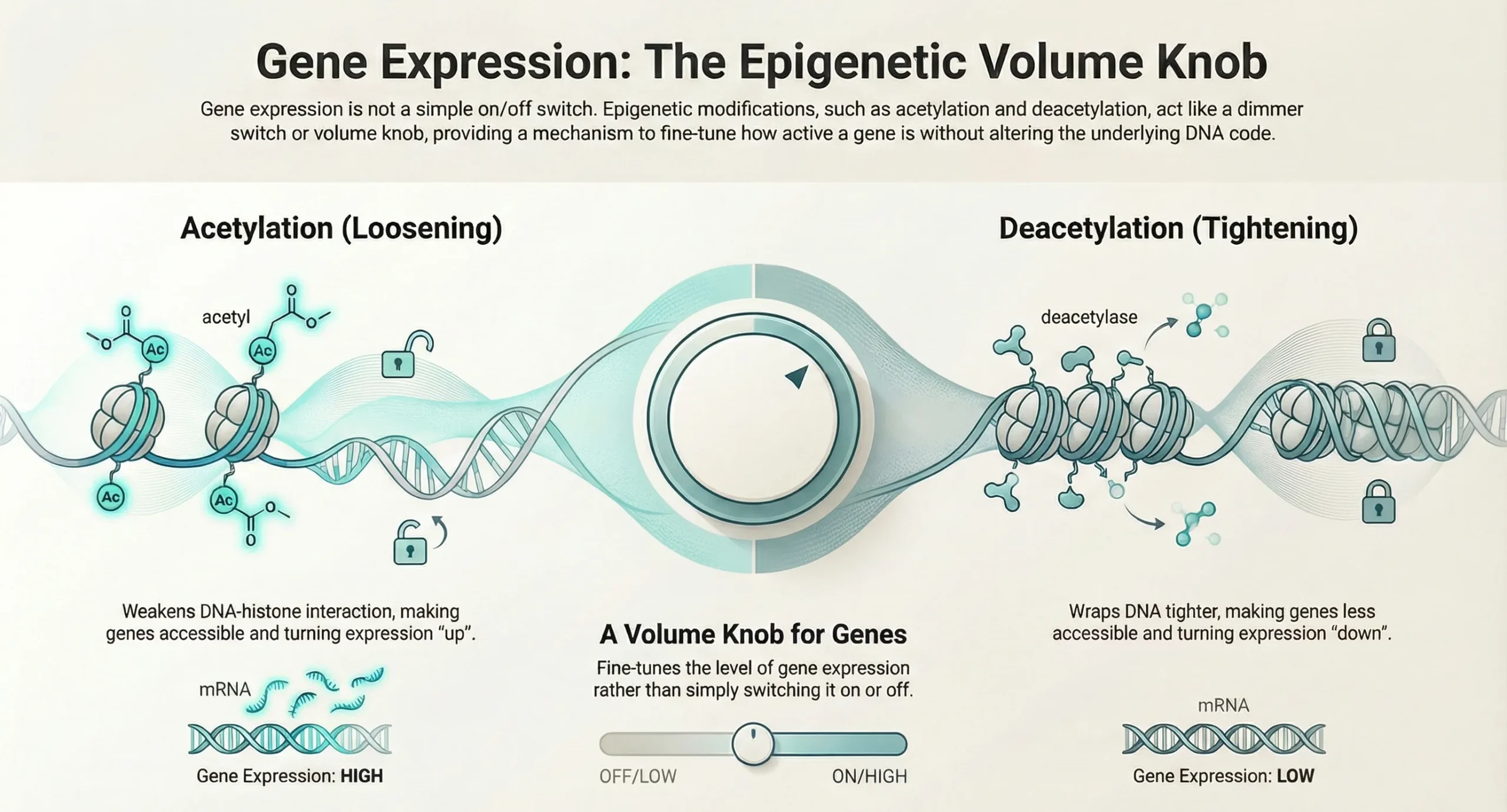
One of the most empowering discoveries in Epigenetics is that the epigenome is not fixed; it is responsive to our environment. Understanding this is one of the major benefits of genetic insights because it proves our daily habits can create positive changes.
Dietary components provide the raw materials for epigenetic modifications.

Physical activity is a powerful modulator of epigenetic marks.
Your mental state and surroundings translate into molecular changes.
One of the most profound concepts is transgenerational epigenetic inheritance. While the DNA sequence is passed down, we now know that environmental “memories” can be passed down too.
A famous example is the Dutch Famine (1944-1945). Mothers who were pregnant during the famine gave birth to children with higher rates of obesity and heart disease. More surprisingly, the grandchildren of these women also showed altered health traits. This suggests that the choices we make today could shape the biology of our future generations.
The reversibility of epigenetic marks makes them incredibly promising targets for medicine. Unlike genetic mutations, which are hard to fix, epigenetic errors can potentially be corrected.
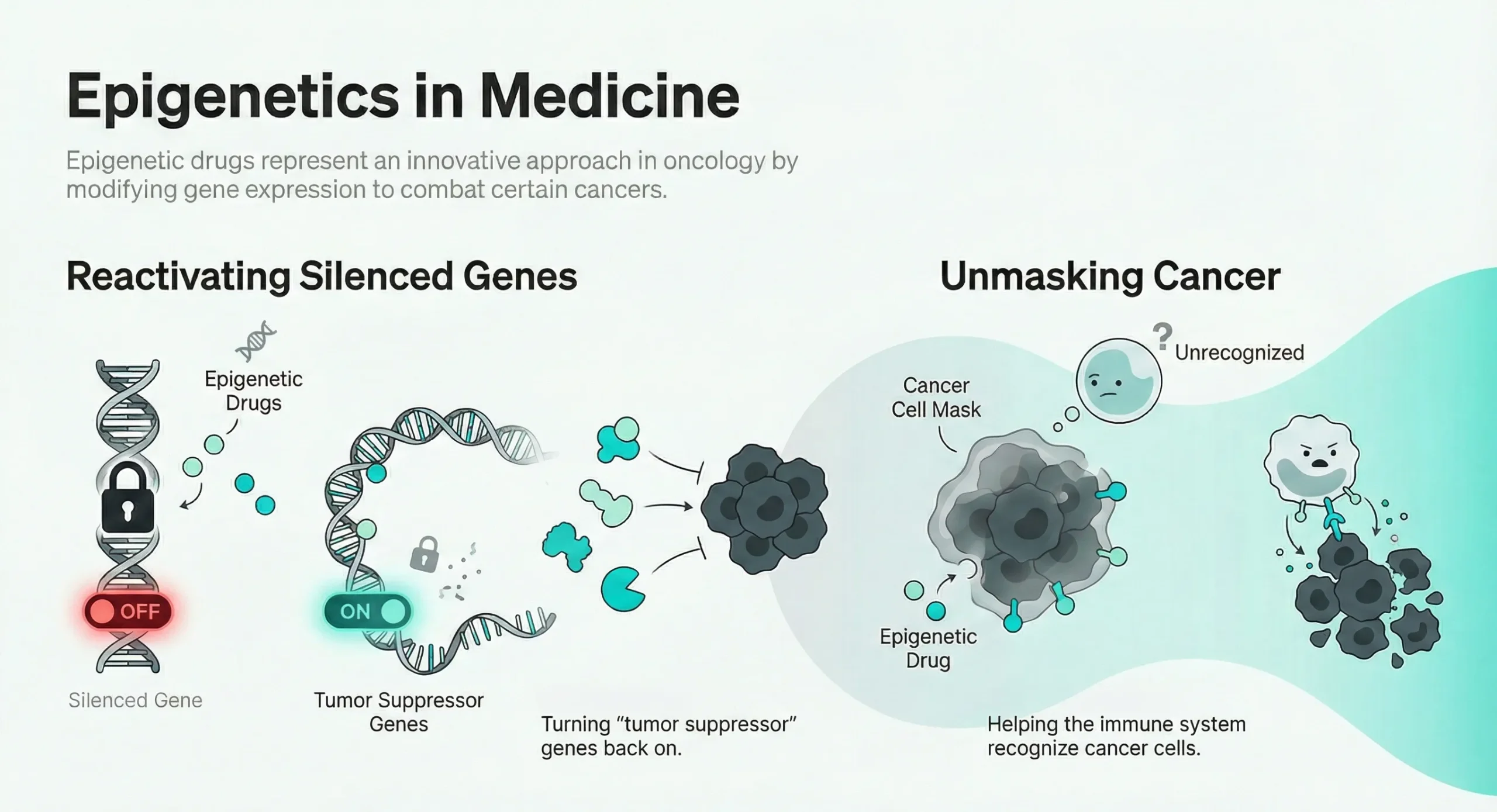
“Epigenetic drugs” are already being used to treat certain cancers by:
While you cannot change the notes written on your genetic sheet music, Epigenetics reveals that you have a significant role as the conductor. Your DNA sequence is the instrument you are given, but your lifestyle and environment determine the symphony that is played. At dnaPower, we help you understand the specific instruments you are working with.
If you are ready to stop guessing and start understanding the specific instruments you are working with, getting a comprehensive overview of your health is the most effective way to begin.
Author: Dr. Lois Nahirney
Medical Review: The dnaPower Science Team