


For many women, perimenopause can feel like the moment when the health strategies that once worked suddenly… don’t.
The same meals may not leave you feeling the same.
Sleep can become more unpredictable.
Energy and mood may shift.
Body composition can change.
Digestion may feel different.
And approaches that worked well throughout your 30s may not feel as effective in your 40s and 50s.
There is a reason for that.
Your health isn’t static. And your approach to it shouldn’t be either.
Perimenopause is a period of significant biological change. While changing hormones are an important part of the picture, they don’t operate in isolation. Nutrition, metabolism, muscle mass, sleep, stress and even the gut microbiome can all contribute to how we feel and function during this stage of life.
Understanding those changes can help shift the conversation from simply trying harder to making more informed, personalized choices.
Perimenopause is the transition leading up to menopause. During this time, levels of hormones such as estrogen and progesterone can fluctuate considerably before eventually declining.
For some women, the transition is relatively subtle. For others, it can bring noticeable changes in:
At the same time, life itself may look very different than it did a decade earlier.
Stress levels may be higher. Sleep patterns may have changed. Exercise routines and eating habits can shift. Muscle mass naturally becomes increasingly important to preserve as we age.
And another important ecosystem may also be changing: the gut microbiome.
The gut microbiome is the community of microorganisms—including bacteria, fungi and viruses—that live within the gastrointestinal tract.
While we often associate the gut with digestion, the microbiome is involved in a much broader range of biological processes. Gut microorganisms can influence nutrient metabolism, immune activity and the production of various microbial metabolites.
Researchers are also investigating the relationship between the gut microbiome and estrogen metabolism.
Certain gut bacteria possess enzymes involved in the metabolism and recycling of estrogens. Researchers sometimes refer to this collection of microbial genes as the estrobolome.
This is an emerging area of science, and it is important not to overstate what we currently know. Changing the microbiome cannot be assumed to “balance hormones,” and microbiome testing is not a diagnostic test for perimenopause or hormonal health.
What this research does demonstrate is something increasingly important in women’s health:
Hormones don’t exist in isolation.
Nutrition, metabolism, the gut microbiome, sleep, movement, stress and hormonal changes interact in complex ways.
When a familiar health routine stops producing the same results, women are often encouraged to simply do more.
Eat less.
Exercise more.
Try another supplement.
Be more disciplined.
But during perimenopause, there may be a much more useful question:
What has changed?
Your hormonal environment is changing. Your body composition may be changing. Your recovery needs may be different. Your lifestyle may have changed. Your nutritional needs and priorities may also be evolving.
And unlike your DNA, your gut microbiome is dynamic.
Diet, medications, lifestyle, environment, illness, age and many other factors can influence its composition over time.
That means continuing to follow exactly the same wellness routine without considering what has changed may overlook useful information about your health today.
Precision health allows us to look at health from more than one perspective.
Your DNA is relatively stable throughout your lifetime. Genetic testing can provide information about inherited tendencies related to areas such as nutrition, metabolism and fitness.
Your gut microbiome is dynamic. It can change in response to diet, lifestyle, medications and other environmental influences.
One can help us understand aspects of our underlying biological blueprint.
The other can provide information about a microbial ecosystem that is continually interacting with our environment and lifestyle.
Together, these different types of information can provide additional context when thinking about personalized health strategies.
This distinction can become particularly relevant during periods of change, including perimenopause.
Unlike DNA, there isn’t one microbiome profile that stays with you unchanged throughout your life.
This is one reason the microbiome is so interesting from a precision-health perspective.
Microbiome testing can provide a snapshot of the microbial ecosystem at a particular point in time. Depending on the type of testing used, it may provide information about areas such as:
The goal isn’t to identify a single “perfect” microbiome.
It’s to better understand what’s happening now.
That information can then become another piece of the larger health picture.
There are foundational habits that support health at virtually every stage of life.
Eating nourishing, minimally processed foods.
Getting enough protein and fibre.
Moving regularly.
Prioritizing strength and maintaining muscle.
Supporting quality sleep.
Managing stress and allowing adequate recovery.
Personalization doesn’t replace these fundamentals.
It can help us become more intentional about how we apply them.
Instead of automatically following the diet that worked five years ago, buying the probiotic someone recommended on social media or assuming that every woman in perimenopause needs the same approach, we can begin asking more individualized questions:
What does my body need at this stage?
What has changed?
What information could help me make better decisions?
This is where precision health can play an important role.
Perimenopause shouldn’t be viewed as a failure of the health habits that came before it.
It’s a transition.
And transitions often require us to reassess.
For some women, that may mean changing the way they exercise to prioritize strength, muscle preservation and recovery.
For others, it may mean taking a closer look at protein, fibre or overall nutrition.
It may mean addressing sleep and stress or discussing new or changing symptoms with a qualified healthcare professional.
And for women interested in understanding another layer of their biology, it may include exploring their gut microbiome.
At dnaPower, MapmyBiome uses metagenomic shotgun sequencing to provide a detailed analysis of the gut microbial ecosystem, with personalized insights designed to help individuals better understand their microbiome and make more informed nutrition and lifestyle choices.
Because sometimes the answer isn’t to try harder.
It’s to understand what’s changed—and adapt with it.
Your health isn’t static.
Your approach to it doesn’t have to be either.
Research suggests there are relationships between sex hormones and the gut microbiome, and researchers are continuing to investigate how the microbiome may differ across different stages of a woman’s life. However, the relationship is complex and research specific to perimenopause continues to evolve.
No. Microbiome testing does not diagnose perimenopause or measure reproductive hormone levels. If you are experiencing symptoms or changes that may be related to perimenopause, speak with a qualified healthcare professional.
The estrobolome is a term researchers use to describe the collection of gut microbial genes capable of metabolizing estrogens. Certain gut bacteria produce enzymes, including beta-glucuronidase, that may affect how estrogens are metabolized and recirculated in the body. Research into its significance for women’s health is ongoing.
Changes in hormones, body composition, muscle mass, activity, sleep and metabolism can affect nutritional priorities during midlife. Protein, fibre, overall dietary quality and adequate nutrient intake become particularly important considerations, although individual needs vary.
DNA testing looks at genetic information that remains relatively stable throughout your life and may provide insights into inherited tendencies.
The gut microbiome, on the other hand, is dynamic and can be influenced by factors such as diet, medications, lifestyle and environment.
They provide different types of information and can offer complementary perspectives when developing a more personalized approach to health.
The gut microbiome can respond to factors including diet, lifestyle and medications, although responses vary considerably between individuals. Rather than trying to create a “perfect” microbiome, the goal is to support a diverse and resilient gut ecosystem through evidence-informed nutrition and lifestyle strategies.
Baker JM, Al-Nakkash L, Herbst-Kralovetz MM. Estrogen–gut microbiome axis: Physiological and clinical implications. Maturitas. 2017;103:45–53.
Peters BA, Santoro N, Kaplan RC, Qi Q. Spotlight on the gut microbiome in menopause: Current insights. International Journal of Women’s Health. 2022;14:1059–1072.
Santos-Marcos JA, Rangel-Zuñiga OA, Jimenez-Lucena R, et al. Influence of gender and menopausal status on gut microbiota. Maturitas. 2018;116:43–53.
Mayneris-Perxachs J, Arnoriaga-Rodríguez M, Luque-Córdoba D, et al. Gut microbiota steroid sexual dimorphism and its impact on gonadal steroids: Influences of obesity and menopausal status. Microbiome. 2020;8:136.
Flores R, Shi J, Fuhrman B, et al. Fecal microbial determinants of fecal and systemic estrogens and estrogen metabolites: A cross-sectional study. Journal of Translational Medicine. 2012;10:253.
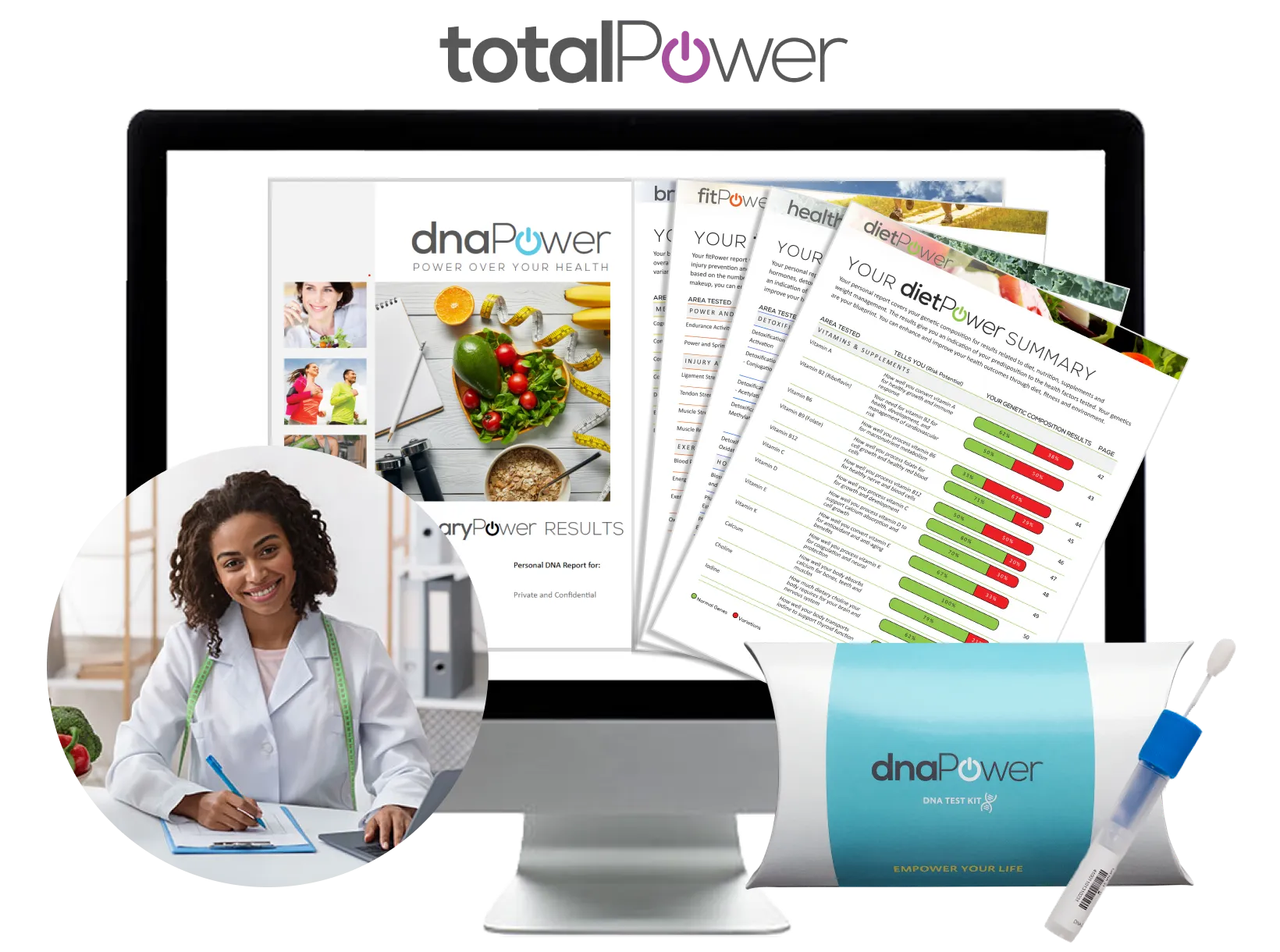
totalPower
CAD $499
This content is intended for educational and informational purposes only. While we strive to provide accurate, science-based insights, we are not medical professionals, and this article is not a substitute for personalized medical advice. Always consult your healthcare provider regarding questions about your health.
Dr. Lois Nahirney founded dnaPower after a personal family health journey. She is dedicated to making the science of genetics simple and actionable. Her mission is to empower everyone with the knowledge to control their well-being.
Get weekly updates on the newest DNA stories, case studies and tips right in your mailbox.