
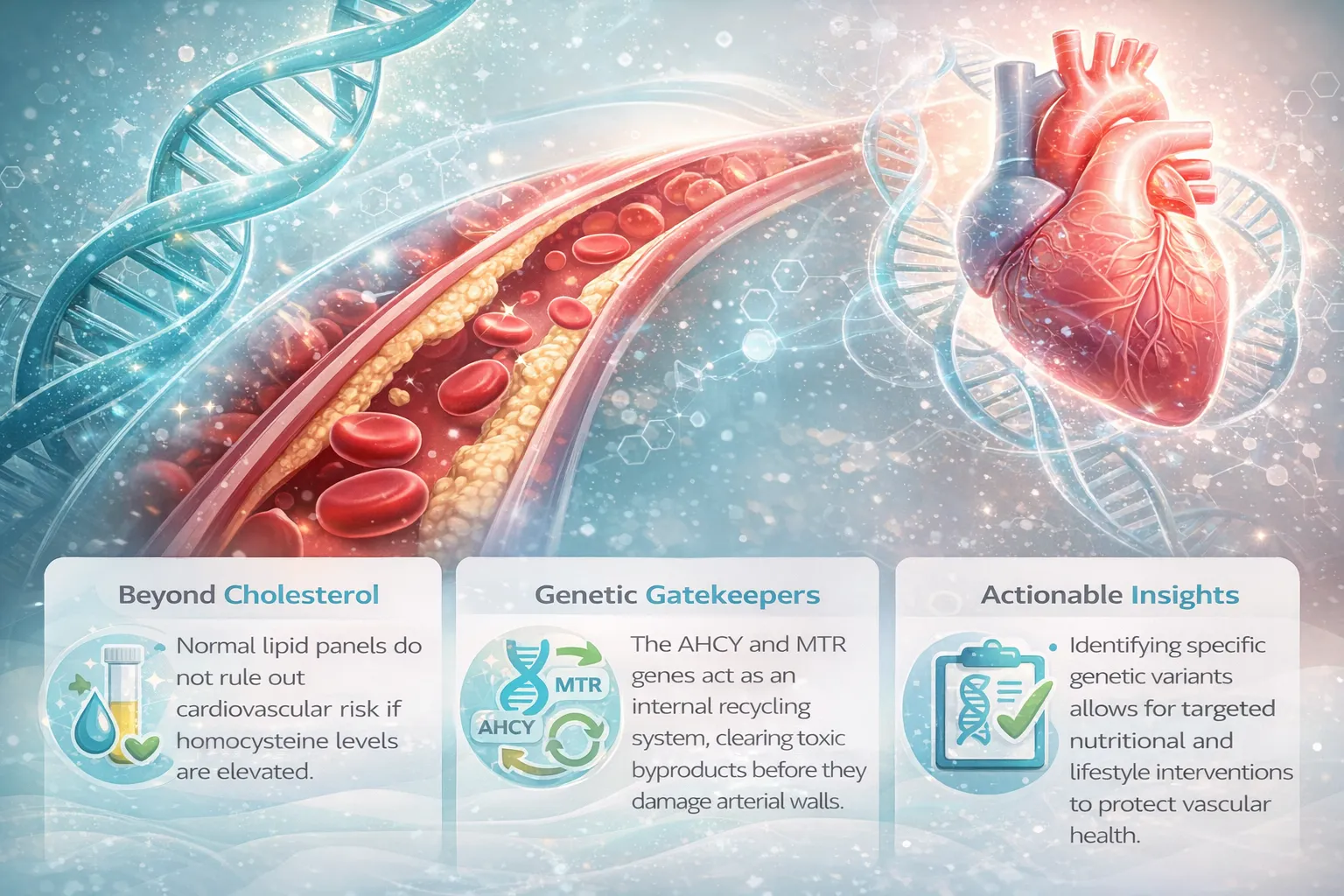
Doctors often see patients with perfect cholesterol levels who still suffer from hidden arterial damage. In fact, a toxic amino acid called homocysteine is usually the real culprit behind this missing puzzle piece. Managing high homocysteine and heart health requires a closer look at your unique DNA. Specifically, the AHCY and MTR genes act as your body’s natural recycling center for these harmful toxins.
When these genes work well, they actively lower the 59% higher stroke risk linked to elevated homocysteine. Taking a proactive approach to wellness requires looking beyond standard markers to understand these underlying biochemical pathways.
Homocysteine is an amino acid derived from methionine, found primarily in animal proteins like red meat and dairy. While it is a natural part of the metabolic cycle, its elevation, known as Hyperhomocysteinemia (HHcy), can be highly detrimental to the vascular system.

When homocysteine accumulates, it converts into a highly reactive metabolite that chemically modifies protein residues. These altered proteins lose their natural function and become pro-inflammatory. This cascade leads to several severe cardiovascular issues:
Clinical data show that for every 5 μmol/L increase in homocysteine, the risk of stroke increases by 59%. While standard labs consider anything under 15 μmol/L “normal,” precision health models target an optimal range of under 8 μmol/L for maximum protection.
Early screening for genetic markers can help identify individuals who naturally struggle to maintain this optimal range.
The ability to maintain low homocysteine levels depends heavily on the efficiency of two critical enzymes.
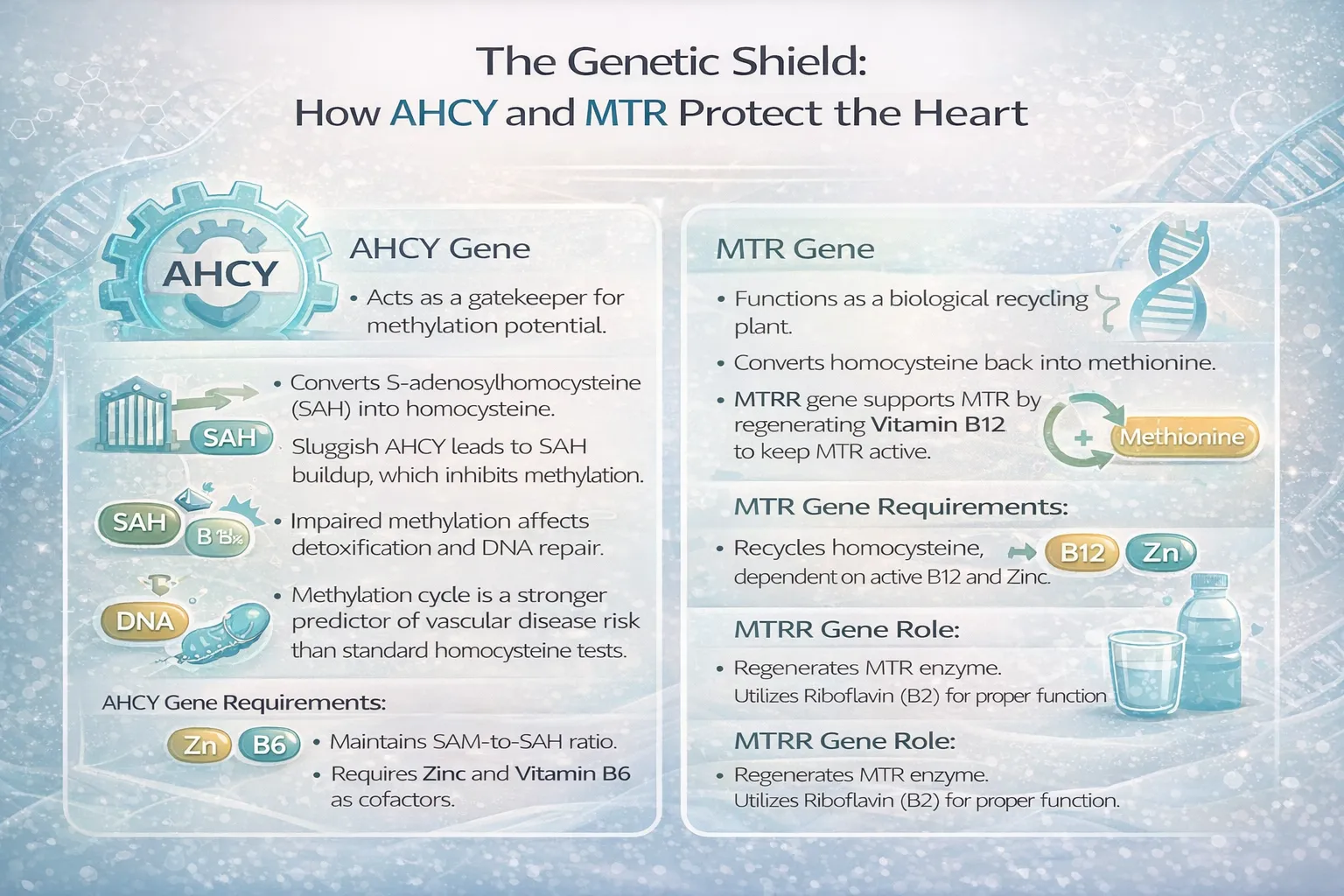
The AHCY gene plays a critical role in converting S-adenosylhomocysteine (SAH) into homocysteine. If the AHCY enzyme is sluggish due to genetic variants, SAH builds up. SAH is a potent inhibitor of nearly all cellular methylation reactions.
When this ratio is disrupted, the body loses its ability to detoxify and repair DNA. Therefore, evaluating the methylation cycle is often considered a stronger indicator of vascular disease risk than standard homocysteine tests alone.
The MTR gene acts as a biological recycling plant, converting homocysteine back into useful methionine. This mechanism requires the MTRR gene to act as a support system, constantly regenerating Vitamin B12 to keep the MTR enzyme in its active state.
Medical professionals frequently observe individuals with identical diets yet vastly different cardiovascular health markers. This discrepancy highlights the difference between a genetic blueprint and its physical expression.

For example, an individual with the MTR A2756G variant may have a tendency toward elevated homocysteine levels, requiring higher doses of specific vitamin cofactors to compensate.
A Critical Clinical Warning: There is a dangerous pitfall in standard vitamin supplementation.
High-dose synthetic folic acid can normalize red blood cell markers, masking a Vitamin B12 deficiency while allowing irreversible neurological and vascular damage to progress.
Vitamin B12 levels must always be corrected before initiating folate therapy.
Furthermore, the specific form of B12 matters. Individuals with certain COMT gene variations often do not tolerate methylcobalamin well and may require hydroxycobalamin or adenosylcobalamin instead.
Addressing enzymatic bottlenecks requires targeted nutrition and precise lifestyle interventions to support high homocysteine and heart health.
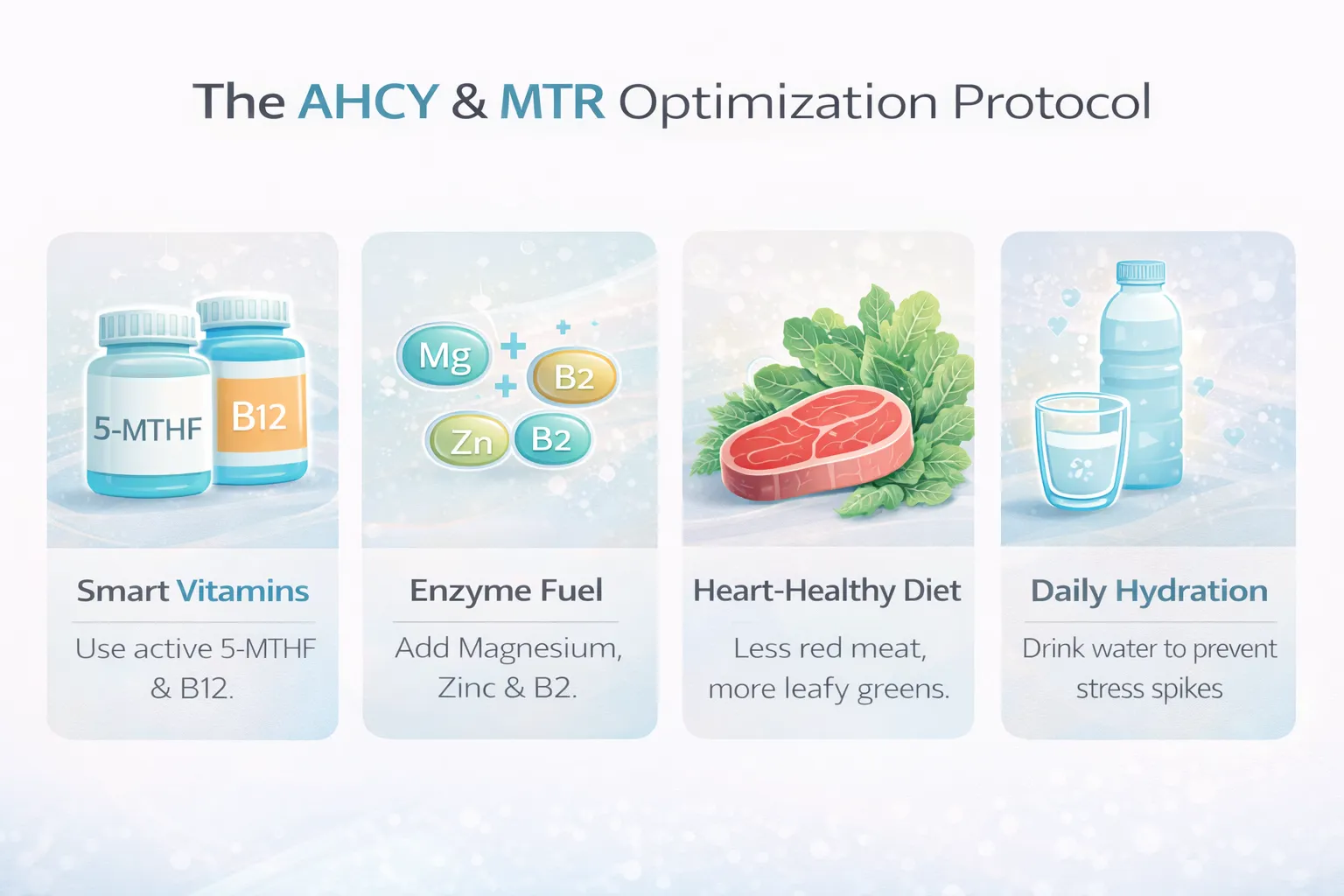
The link between high homocysteine and heart health represents one of the most actionable insights in modern genomic medicine. By identifying unique AHCY and MTR gene statuses, it is possible to transition from generic health advice to highly personalized preventative care.
Do not wait for a vascular event to discover hidden risks. Moving beyond standard blood tests with a complete genetic health analysis allows individuals to optimize their internal pathways and protect long-term cardiovascular well-being.