Heavy menstrual bleeding (HMB), medically known as menorrhagia, affects millions of women worldwide and can have a significant impact on quality of life.
For many women, heavy periods mean more than inconvenience. They can lead to fatigue, iron deficiency, missed work or social activities, and ongoing frustration—especially when the underlying cause isn’t immediately clear.
Heavy menstrual bleeding can result from a variety of medical conditions, and it’s important to work with your healthcare provider to identify the underlying cause. Alongside conventional medical care, personalized genetic insights may help you better understand biological pathways involved in hormone metabolism, inflammation, nutrient utilization, and overall health.
Heavy menstrual bleeding has many possible causes, including:
Sometimes no obvious cause is identified.
Because there are many possible explanations, medical evaluation is important before assuming hormones alone are responsible.
One of the most common consequences of heavy menstrual bleeding is iron deficiency.
Over time, excessive blood loss can deplete your body’s iron stores, increasing the risk of iron deficiency anemia.
Common symptoms include:
If you’re experiencing heavy periods, your healthcare provider may recommend blood work to assess your iron status.
Your genes cannot diagnose the cause of heavy menstrual bleeding.
However, they may provide additional insight into biological pathways that influence how your body functions, including hormone metabolism, inflammation, oxidative stress, nutrient utilization, and detoxification pathways involved in estrogen metabolism.
Understanding these pathways may help support a more personalized nutrition and lifestyle plan.
The dnaPower totalPower DNA test provides personalized genetic insights into more than 80 areas related to health and wellness.
For women experiencing heavy menstrual bleeding, genetic insights may provide additional information in several key areas.
The totalPower test includes genes involved in estrogen metabolism.
Understanding how your body processes estrogen may help support personalized nutrition and lifestyle strategies designed to promote hormonal balance.
Heavy menstrual bleeding often increases the body’s need for nutrients, particularly iron.
The totalPower test also provides insights into genes involved in nutrient metabolism, helping personalize nutrition recommendations that support overall health.
Healthy methylation pathways and antioxidant defenses support many normal physiological processes, including hormone metabolism.
Genetic variations affecting these pathways may help guide more personalized nutrition and lifestyle recommendations.
Chronic inflammation has been associated with several gynecological conditions, that may contribute to heavy menstrual bleeding in some women.
The totalPower test provides insights into genes involved in inflammatory pathways, helping you better understand your unique biology.
After receiving your results, you’ll receive personalized recommendations based on your genetic profile.
These may include guidance on:
These recommendations are designed to support your overall health and complement the advice provided by your healthcare team.
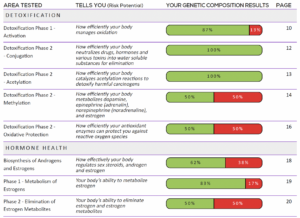
Jessica has experienced heavy menstrual bleeding for several years and has already worked with her healthcare provider to rule out underlying medical conditions.
Her dnaPower totalPower results suggest reduced efficiency in methylation and oxidative protection pathways.
These findings don’t explain why Jessica experiences heavy periods, but they do provide useful information for creating a more personalized wellness plan.
Working with her healthcare provider or nutrition professional, Jessica focuses on eating foods rich in folate, vitamins B6 a
nd B12, magnesium, and antioxidants while adopting lifestyle habits that support healthy estrogen metabolism and reduce oxidative stress.
Rather than guessing which strategies may benefit her most, Jessica is able to make more informed decisions based on h
er unique biology.
With this targeted approach, Jessica can alleviate her heavy periods and hormonal imbalances by addressing her genetic predispositions. The dnaPower totalPower test offers a comprehensive view, helping her make personalized choices that support her overall health.
Regardless of your genetics, healthy lifestyle habits play an important role in supporting menstrual health.
These include:
Small, consistent lifestyle habits often have the greatest long-term impact.
You should seek medical advice if you:
These symptoms may require further medical evaluation.
Heavy menstrual bleeding is common, but it shouldn’t simply be accepted as “normal.”
Finding the underlying cause is the first step toward effective treatment.
While genetics cannot diagnose heavy menstrual bleeding, personalized DNA insights may help you better understand biological pathways related to hormone metabolism, inflammation, nutrient utilization, and overall wellness.
Combined with medical care and healthy lifestyle habits, the dnaPower totalPower test can help support a more personalized approach to your health.
Important: The dnaPower totalPower test is designed to provide genetic insights that support personalized health and wellness. It is not intended to diagnose, treat, or replace medical evaluation for heavy menstrual bleeding or other health conditions.
Not directly. Heavy menstrual bleeding usually has multiple causes. Genetics may influence biological pathways related to hormone metabolism, inflammation, and nutrient utilization, but they do not diagnose the underlying cause.
No. A DNA test cannot diagnose fibroids, endometriosis, thyroid disorders, or other medical conditions. It provides insights that may help personalize nutrition and lifestyle recommendations.
Estrogen plays an important role in regulating the menstrual cycle. Genetic differences in estrogen metabolism may influence how efficiently estrogen is processed, although many other factors contribute to hormonal balance.
Heavy menstrual bleeding is a common cause of iron deficiency. If you’re experiencing heavy periods, speak with your healthcare provider about whether iron testing is appropriate.
A balanced diet that provides adequate iron, protein, healthy fats, B vitamins, magnesium, and antioxidant-rich foods supports overall hormonal and menstrual health. Nutrition should complement—not replace—medical evaluation and treatment when needed.
American College of Obstetricians and Gynecologists (ACOG). Heavy Menstrual Bleeding.
National Institute for Health and Care Excellence (NICE). Heavy Menstrual Bleeding: Assessment and Management (NG88).