

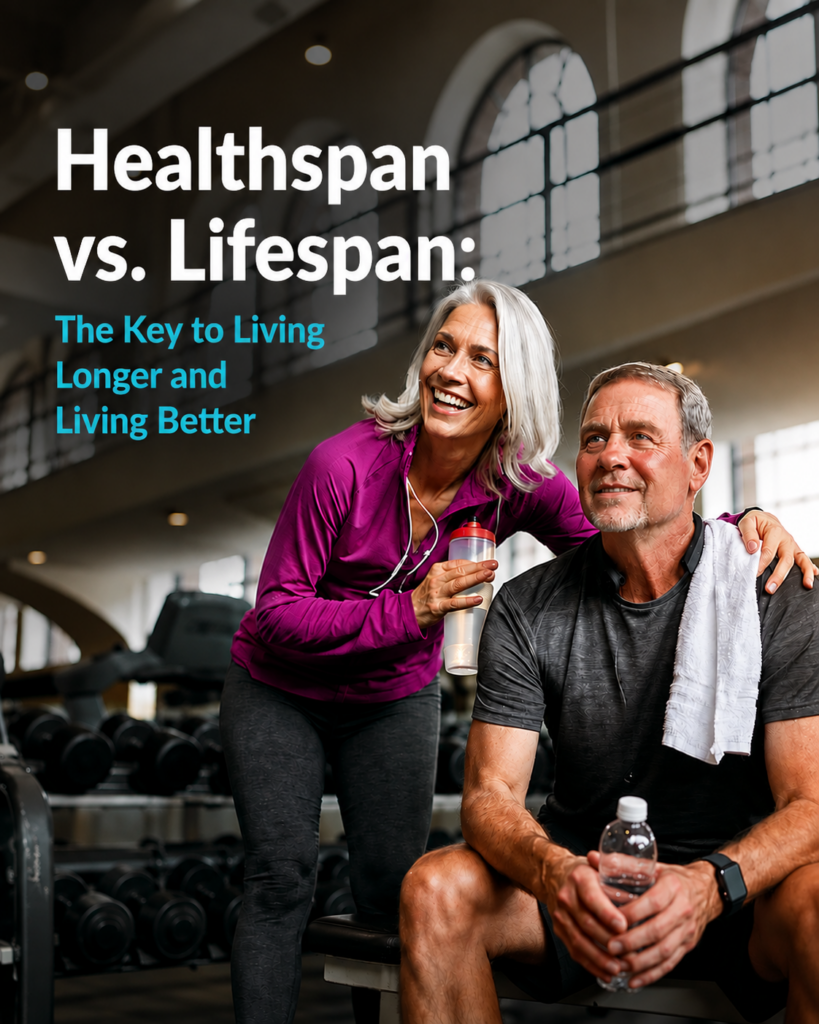
When people think about longevity, they often think about living longer.
But longevity isn’t simply about adding more years to your life—it’s about adding more life to your years.
This is where two important concepts come into play: lifespan and healthspan.
While lifespan refers to how many years you live, healthspan focuses on the quality of those years. Advances in personalized medicine and genetics are helping us better understand how to optimize not just how long we live, but how well we live.
Lifespan is the total number of years a person lives.
Over the past century, advances in medicine, sanitation, nutrition, and public health have significantly increased average life expectancy around the world.
However, living longer doesn’t always mean living healthier.
Many people spend the final years of their lives managing chronic conditions such as:
Increasing lifespan is an incredible achievement—but ideally, those extra years should also be healthy, active, and enjoyable.
Healthspan refers to the number of years you spend living in good physical, mental, and emotional health, free from significant chronic disease or disability.
Instead of asking:
“How long will I live?”
Healthspan asks:
“How long can I remain healthy, active, energetic, and independent?”
For many researchers, clinicians, and healthy aging experts, improving healthspan has become just as important—if not more important—than extending lifespan.
Healthy aging is influenced by many interconnected factors, including:
While lifestyle choices are amoung the biggest drivers of long-term health, genetics influence how your body responds to those lifestyle choices.
For example, your genes may influence:
Understanding these genetic tendencies can help personalize your health strategy rather than relying on generalized recommendations.
One of the biggest misconceptions about genetics is that your DNA determines your destiny.
It doesn’t.
Your DNA is a blueprint—not a prediction.
While you can’t change your genes, you can influence how they interact with your environment through your everyday lifestyle choices.
A nutritious diet, regular physical activity, quality sleep, stress management, and other healthy habits all work together to support healthy aging, regardless of your genetic profile.
Personalized genetic insights simply provide another layer of information that can help you make more informed decisions based on your unique biology.
As interest in longevity continues to grow, many people are looking for ways to move beyond generic health advice.
The dnaPower totalPower DNA test provides personalized genetic insights into more than 80 areas related to health, wellness, nutrition, metabolism, fitness, sleep, stress response, and healthy aging.
Rather than guessing which nutrition or lifestyle strategies may work best for you, totalPower helps you better understand your unique genetic blueprint so you can make more informed decisions about your long-term health.
Learn more about the dnaPower totalPower test here.
Living longer is an incredible achievement.
Living well for longer – and maintaining your independance and quality of life – is an even greater goal.
While lifespan measures the number of years you live, healthspan measures the quality of those years.
By combining healthy lifestyle habits with personalized genetic insights, you can take a more proactive approach to supporting healthy aging and improving your quality of life.
Your genetics don’t define your future—but they can help you better understand your body, personalize your choices, and maximize the years you spend living a healthy, active, and fulfilling life.
Lifespan is the total number of years you live. Healthspan refers to the number of those years spent in good health, free from major chronic disease or disability.
Healthspan focuses on maintaining quality of life as you age. The goal isn’t simply to live longer—it’s to stay healthy, active, independent, and able to enjoy those additional years.
No. While genetics contribute to longevity, lifestyle factors such as nutrition, exercise, sleep, stress management, and environmental exposures play a significant role in determining long-term health outcomes.
A DNA test cannot predict your future, but it can provide valuable insights into how your body may respond to nutrition, exercise, inflammation, stress, and other lifestyle factors. These insights can help personalize your health and wellness plan.
Research consistently shows that healthy aging is supported by:
No. Genetics are just one piece of the puzzle. Most researchers agree that lifestyle and environmental factors have a significant influence on healthy aging. Understanding your genetics simply helps you make more personalized decisions that may better support your long-term health.
Attia P. Outlive: The Science and Art of Longevity. Harmony; 2023.
World Health Organization. Ageing and Health. https://www.who.int/news-room/fact-sheets/detail/ageing-and-health
National Institute on Aging. What Do We Know About Healthy Aging? https://www.nia.nih.gov/health

totalPower
USD $399
This content is intended for educational and informational purposes only. While we strive to provide accurate, science-based insights, we are not medical professionals, and this article is not a substitute for personalized medical advice. Always consult your healthcare provider regarding questions about your health.
Dr. Lois Nahirney founded dnaPower after a personal family health journey. She is dedicated to making the science of genetics simple and actionable. Her mission is to empower everyone with the knowledge to control their well-being.
Get weekly updates on the newest DNA stories, case studies and tips right in your mailbox.