


You’ve probably heard the advice: eat more vegetables, choose whole foods, get enough protein, limit highly processed foods.
It’s good advice. But if nutrition were truly one-size-fits-all, wouldn’t the same diet work equally well for everyone?
A DNA nutrition test can provide insight into genetic differences that may influence how your body responds to certain nutrients and dietary factors. One person can drink coffee after dinner and sleep soundly. Another feels wired after a cup at noon. Some people digest dairy without a second thought, while others experience uncomfortable symptoms. And our bodies can differ in how they process or respond to certain fats, carbohydrates, vitamins and other nutrients.
Part of the reason may be written in your DNA.
The growing field of nutrigenetics looks at how genetic differences may influence the way individuals respond to nutrients and dietary factors. But does that mean a DNA test can actually tell you what to eat?
Not exactly—and that distinction is important.
Your DNA isn’t a diet plan. Instead, it can provide another layer of information that may help you better understand your individual nutritional tendencies.
Almost all humans share the vast majority of their DNA. But small genetic variations help make each of us biologically unique.
Some of these variations can influence proteins and enzymes involved in processes such as nutrient metabolism, caffeine metabolism and other aspects of our response to food.
This is where nutrigenetics comes in.
Nutrigenetics examines how differences in our genes may affect our response to nutrients and dietary components. Researchers continue to investigate how this information could contribute to more personalized approaches to nutrition.
Think of it this way:
General nutrition guidelines tell us what tends to support health across a population. Your genetics may add information about you as an individual.
It doesn’t mean throwing healthy eating principles out the window. It means adding another piece to the puzzle.
Depending on the genes and variants examined, genetic testing may provide insights into areas of nutrition such as:
Have you ever wondered why your friend can order an espresso after dinner while you’re still regretting your 2 p.m. coffee at bedtime?
Genetics may be one piece of the explanation.
The CYP1A2 enzyme plays a major role in caffeine metabolism, and genetic variation can contribute to differences in how quickly caffeine is metabolized.
Knowing more about your genetic tendency doesn’t mean you must give up coffee. Instead, it may provide context for making decisions about how much caffeine you consume and when.
Your ability to digest lactose—the natural sugar found in milk and dairy products—is also strongly influenced by genetics.
Some people continue producing sufficient amounts of the enzyme lactase into adulthood, while production decreases in others.
That doesn’t necessarily mean DNA alone should determine whether dairy belongs in your diet. Your symptoms, food preferences, nutritional needs and overall health still matter.
But genetic information may help explain why the same glass of milk can be completely uneventful for one person and uncomfortable for another.
Genetic differences can also occur in pathways involved in the metabolism or utilization of certain nutrients.
One familiar example is folate metabolism.
MTHFR gets a lot of attention, but it is only one gene involved in the much larger methylation pathway. Looking at multiple relevant variants can provide more context than focusing on a single gene in isolation.
The important takeaway isn’t that a particular variant automatically means you are deficient in a nutrient.
Genetic predisposition and current nutrient status are not the same thing.
A DNA test may provide information about an inherited tendency. Blood testing, dietary assessment and guidance from a healthcare professional may be needed to understand what is actually happening in your body today.
This is where the conversation becomes more complicated.
Researchers have investigated whether genetic differences influence individual responses to dietary fat, carbohydrates and other macronutrients. There are interesting gene-diet relationships, but complex outcomes such as weight, blood glucose and cardiovascular health are influenced by many genes as well as lifestyle and environmental factors.
So be cautious of claims such as:
“Your DNA says you should eat keto.”
or
“Your genes say carbohydrates are bad for you.”
That’s an oversimplification of both genetics and nutrition.
A more useful question might be:
What does my genetic information tell me about some of my nutritional tendencies—and how can I use that information alongside everything else I know about my health?
That’s precision nutrition.
At dnaPower, we often think about DNA as your biological blueprint.
Your DNA is largely fixed throughout your lifetime. But your health isn’t.
What you eat, how much you move, your sleep, stress, medications, age, hormones, environment and other factors can all influence your health.
And there’s another highly individual factor to consider:
your gut microbiome.
Unlike your DNA, your gut microbiome is dynamic. It can change over time in response to diet, lifestyle, medications, age and other influences.
That creates an interesting distinction:
DNA can provide insight into some of your inherited tendencies.
Your microbiome can provide information about a biological ecosystem that is changing throughout your life.
Neither tells the entire story on its own.
Together with information about your current health, lifestyle, diet and appropriate clinical testing, they can contribute to a more personalized understanding of you.
No—and a responsible DNA test shouldn’t claim that it can.
Your genes don’t produce a perfect grocery list.
They can’t tell you that broccoli is “good” for you and tomatoes are “bad.” They don’t replace bloodwork, medical care or the expertise of a qualified healthcare professional.
What DNA can do is provide information about genetic differences that may influence certain aspects of nutrition and metabolism.
That information may help you ask better questions:
Why does caffeine affect me differently?
Are there genetic factors relevant to how I metabolize certain nutrients?
Could my genetics provide additional context for my nutrition choices?
Are there areas of my diet that may be worth paying closer attention to?
That is very different from following another generic diet.
Research into nutrigenetics and personalized nutrition is growing, but it is still an evolving field.
Some studies suggest personalized nutrition approaches can improve dietary behaviours, while systematic reviews specifically examining the addition of genetic information have found inconsistent results and limitations in the available evidence.
The Academy of Nutrition and Dietetics has specifically cautioned that dietary recommendations based solely on DNA do not represent true precision nutrition. Genetics should instead be considered alongside factors such as health status, lifestyle and individual preferences.
That’s an important distinction.
DNA isn’t the answer to nutrition. It’s another source of information that can help make nutrition more personal.
Nutrition doesn’t have to start with:
What’s the best diet?
A better question may be:
What’s important for me?
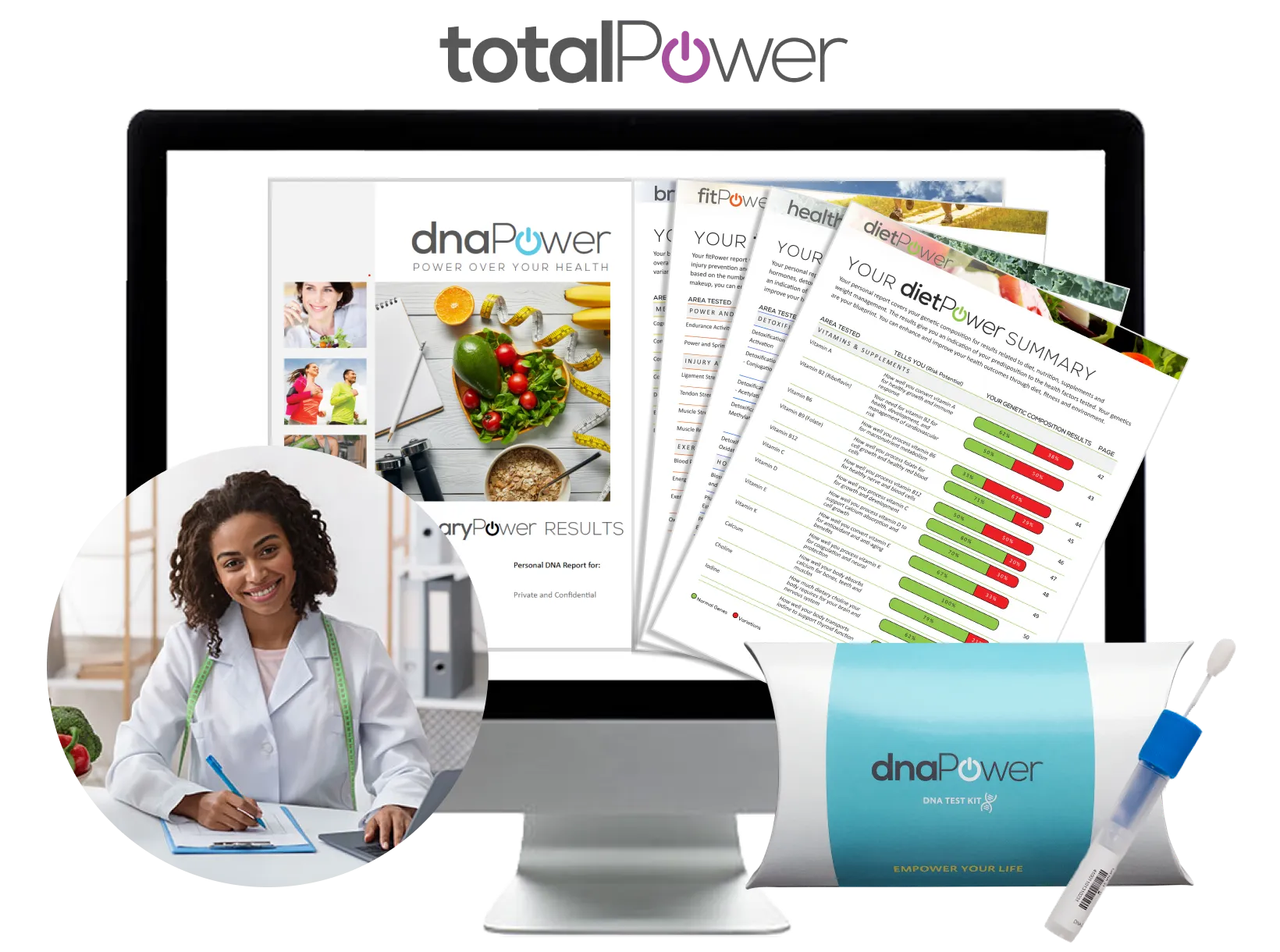
With dnaPower’s totalPower DNA test, you can explore genetic insights across nutrition, metabolism, fitness, health and other areas of wellness.
Rather than changing your diet based on the latest wellness trend, genetic insights can give you another piece of information to consider as you build an approach around your own biology.
Because when it comes to nutrition, knowing more about yourself may be more useful than knowing what everyone else is eating.
[Explore totalPower DNA Testing]
Not exactly. DNA testing can identify genetic variations associated with certain aspects of nutrient metabolism and dietary response, but it cannot create a definitive list of foods that everyone with a particular genetic variant should or shouldn’t eat. Genetics is one component of personalized nutrition.
Nutrigenetics is the study of how genetic differences between individuals may influence their response to nutrients and dietary components.
A laboratory can accurately identify the genetic variants being tested, but interpreting what those variants mean for nutrition is more complex. The scientific evidence supporting different gene-diet relationships varies, which is why results should be interpreted in context rather than treated as strict dietary rules.
Not on its own. Body weight and response to a particular diet are influenced by many genetic, biological, behavioural and environmental factors. Research has not established a single genetically determined “best diet” for weight loss.
No. Genes can contribute to certain traits and predispositions, but they are not your destiny. Diet, physical activity, sleep, environment, medications and many other factors also influence health.
Your inherited DNA generally doesn’t change, so you typically don’t need to repeatedly test the same genetic variants. However, the scientific understanding of those variants can evolve as new research becomes available.
totalPower
CAD $499
This content is intended for educational and informational purposes only. While we strive to provide accurate, science-based insights, we are not medical professionals, and this article is not a substitute for personalized medical advice. Always consult your healthcare provider regarding questions about your health.
Dr. Lois Nahirney founded dnaPower after a personal family health journey. She is dedicated to making the science of genetics simple and actionable. Her mission is to empower everyone with the knowledge to control their well-being.
Get weekly updates on the newest DNA stories, case studies and tips right in your mailbox.