

The New Year’s resolutions are set: a cleaner diet, regular exercise, and better sleep hygiene. Yet, a persistent feeling of fatigue often lingers. If being tired feels permanent, the answer may not lie in another diet plan, but deep within the cells. The root cause could be an impairment in a fundamental biological process: the methylation cycle.
When this critical process is inefficient, it can become a major source of energy drain and brain fog. But a solution exists. You can now determine if you have a genetic variation that can block the methylation cycle, and if you do, there are actions you can take to optimize your health.
The easiest way to understand methylation is to picture it as a system of “on/off switches” inside the body. It is a biochemical process that controls which genes are active. When working correctly, the body functions optimally; when it isn’t, methylation cycle fatigue sets in.
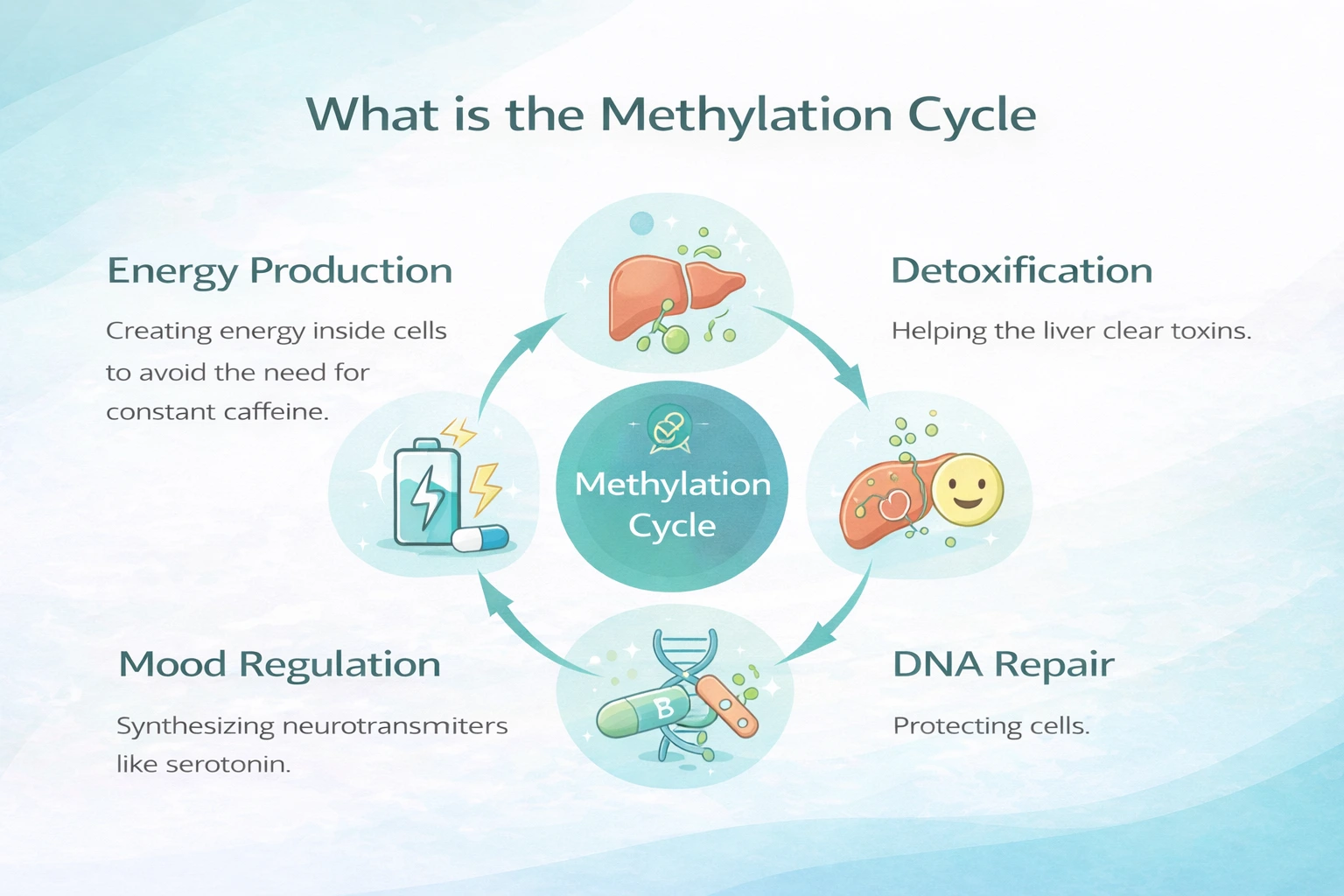
This simple process drives critical functions:
When the methylation cycle is blocked or inefficient, it manifests as persistent, confusing symptoms. Chronic fatigue is the most common sign, but not the only one. Many individuals suffer from “exhaustion” for years before realizing they need to support their methylation pathways.
Common symptoms include:
Personalized testing options are now available for those seeking advanced genetic insights. Finding out if you have an MTHFR genetic variation can provide the key to unlocking the reason behind fatigue.
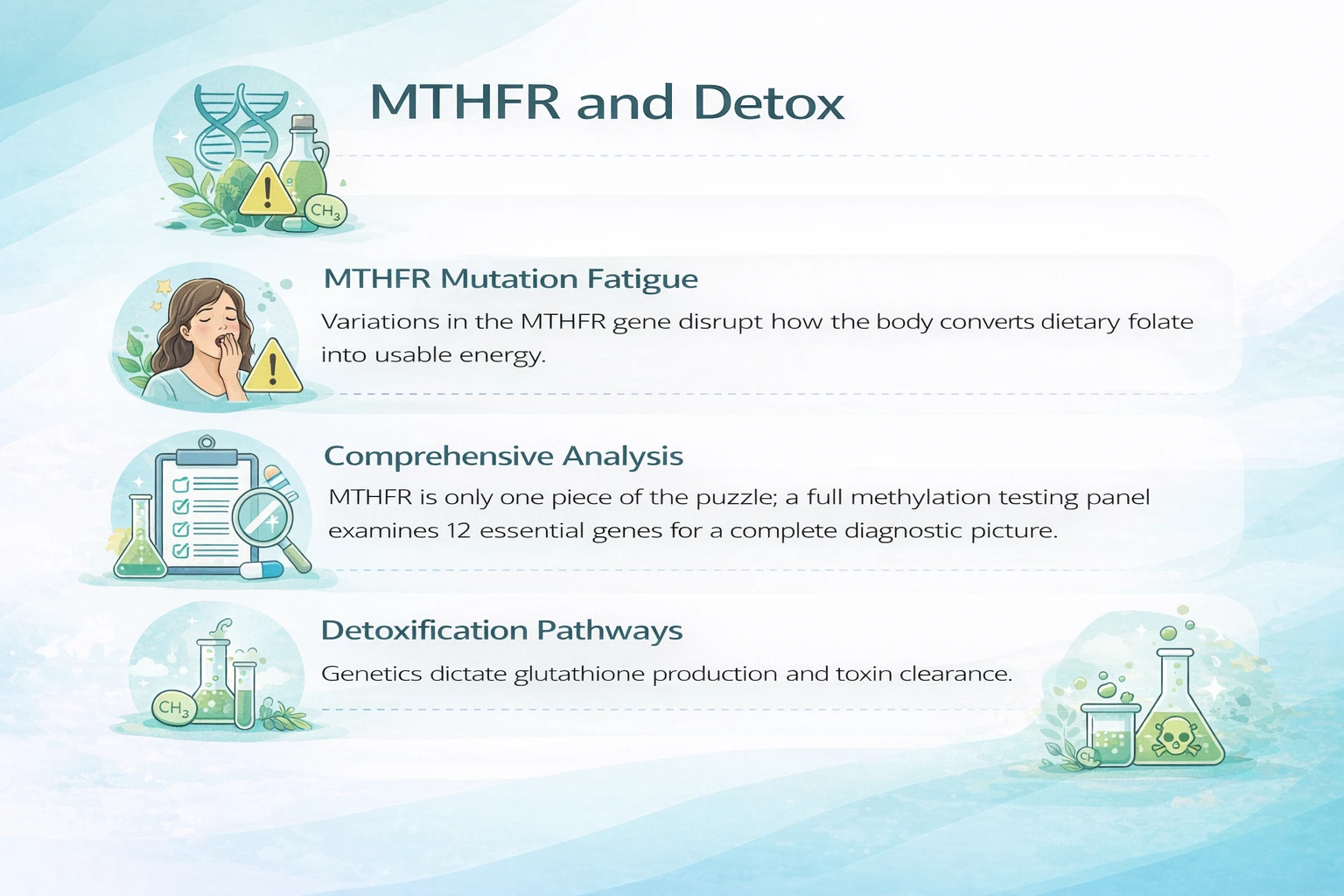
Genes act as the managers for this process. Small variations can make the cycle less efficient. This is the core of MTHFR mutation fatigue; a variation in the MTHFR gene impacts how the body converts dietary folate into energy.
However, MTHFR is just one piece. A comprehensive methylation testing panel analyzes 12 essential genes to provide a full picture.
Detoxification pathways are also heavily influenced by genetics. Processes like glutathione production consume methyl groups. If these pathways are inefficient, your overall health suffers.
(Learn more about 7 genes that play an important role in immune function here).
By understanding these pathways, individuals gain a clearer understanding of their body’s unique needs.
Daily habits have a huge impact on how the genetic blueprint is expressed.
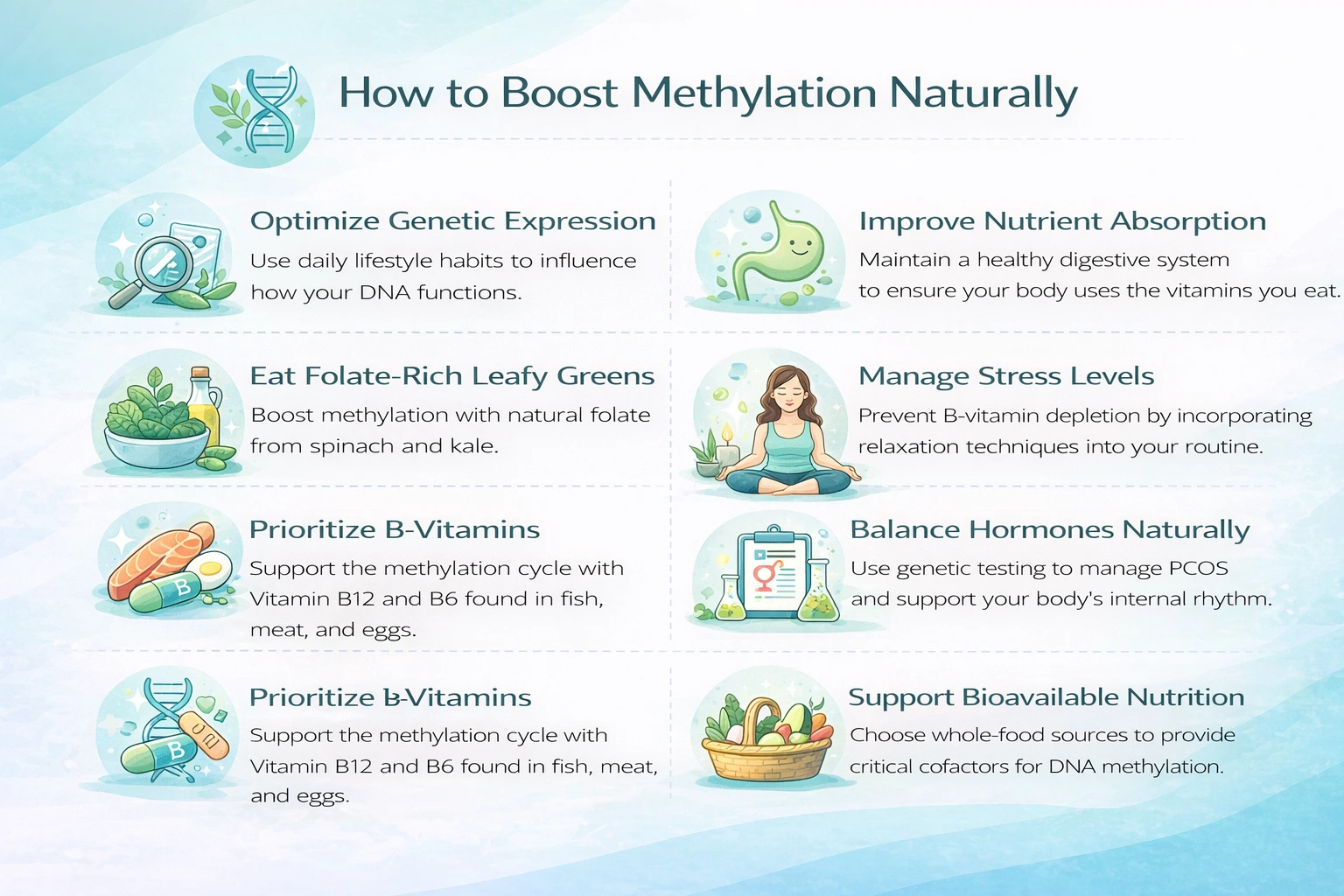
Diet is a powerful tool.
Stress depletes B-vitamins. Finding ways to relax is important for preserving these nutrients. Hormonal balance is also key; learn more about managing PCOS with genetic testing to support the body’s overall rhythm.
The only way to truly understand the body’s potential is through a DNA test. Guesswork leads to frustration. A genetic test provides a personalized roadmap.

The process is simple, requiring only a quick cheek swab. Discover the benefits of DNA testing for health to see how data transforms daily life.
If the feeling of being tired persists, it’s time to stop guessing. That exhaustion isn’t a lack of willpower; it could be a signal from the body that the methylation cycle needs support.
A DNA test is the tool that replaces frustration with clarity. Don’t spend another year feeling drained. Discover the genetic blueprint and unlock the energy that has been missing.