

Many people have heard of MTHFR, but far fewer know about the MTR gene. While MTHFR gets the attention, the MTR gene does the heavy lifting inside your body’s methylation cycle. Even if you eat healthy greens and take regular B12 vitamins, your system can stall if your MTR gene is not working right. At dnaPower, our MTR gene test helps you see how your body uses Vitamin B12 to protect your heart, clear out toxins, and repair your DNA.
The MTR gene has one essential job: it creates an enzyme that turns a protein called homocysteine into a helpful nutrient called methionine.
To do its work, the MTR gene needs two things:
Methionine is critical for:
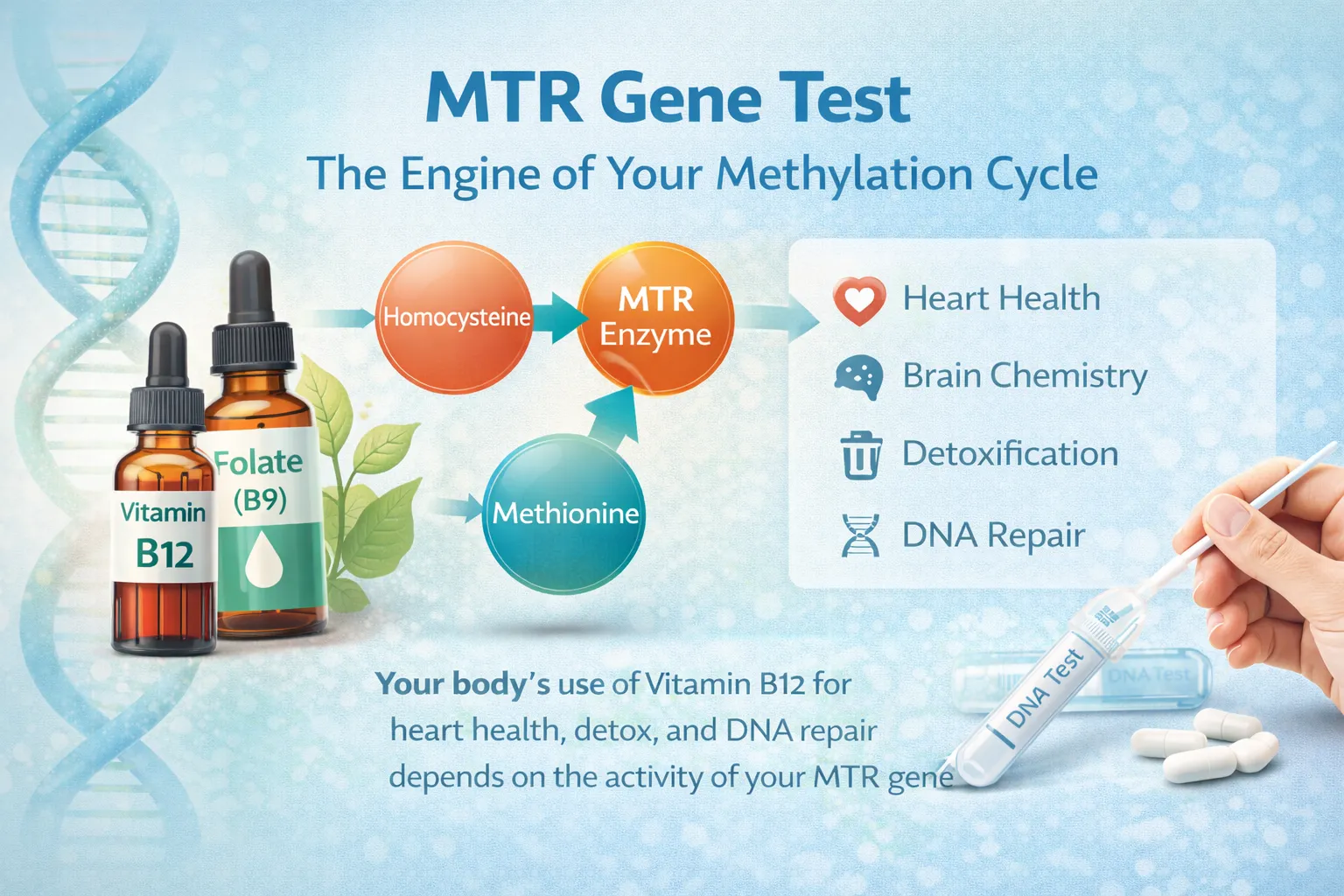


This is key: MTR is part of a larger methylation system, not a standalone gene.
dnaPower does not test MTR in isolation. We analyze the full methylation pathway to show how all the pieces interact.
Our methylation testing includes:
Together, these genes explain why B12 and folate supplements may or may not work for you.
The MTR gene acts like a manager for your health by using Vitamin B12 to protect your heart and keep your brain feeling energized throughout the day.
Heart Health
MTR helps control a protein called homocysteine. If this protein builds up, it can stress your heart and veins.
Energy and Brain Function
When MTR is sluggish, it leads to "brain fog," constant tiredness, and a hard time handling stress.
Plant-Based Diets
If you are a vegetarian or vegan, you need your MTR gene to be very efficient. A variation here means you might run low on B12 even if you eat well.
Healthy Aging
As we get older, our bodies naturally struggle to absorb B12. If your MTR gene is already slow, it can lead to memory issues and very low energy as you age.
A standard blood test shows how much B12 is floating in your veins, but it doesn’t show if your body is actually using it.
Genetics help explain:
Standard blood work doesn’t measure:
Learn more in our Heart Health Genetics and Energy & Fatigue Genetics resources.

Your dnaPower report helps you understand:
All results are delivered as part of your Total Health Blueprint, with clear explanations and practical guidance.
Depending on your results, you can support your MTR gene by:

Think of your DNA as the instruction manual for your health. The MTR gene is a key factor that explains why you might feel tired or foggy. Once you read your report, you can stop trying random supplements and start a plan that actually works. It is time to see the big picture and help your body run exactly the way it was meant to.
MTR and MTRR work as a team.
Because methylation is a system, not a single switch.
dnaPower evaluates MTR alongside:
Not at all. The test uses a simple cheek swab and takes less than one minute to complete.
dnaPower specializes in lifestyle and wellness genetics.
Our approach focuses on: